
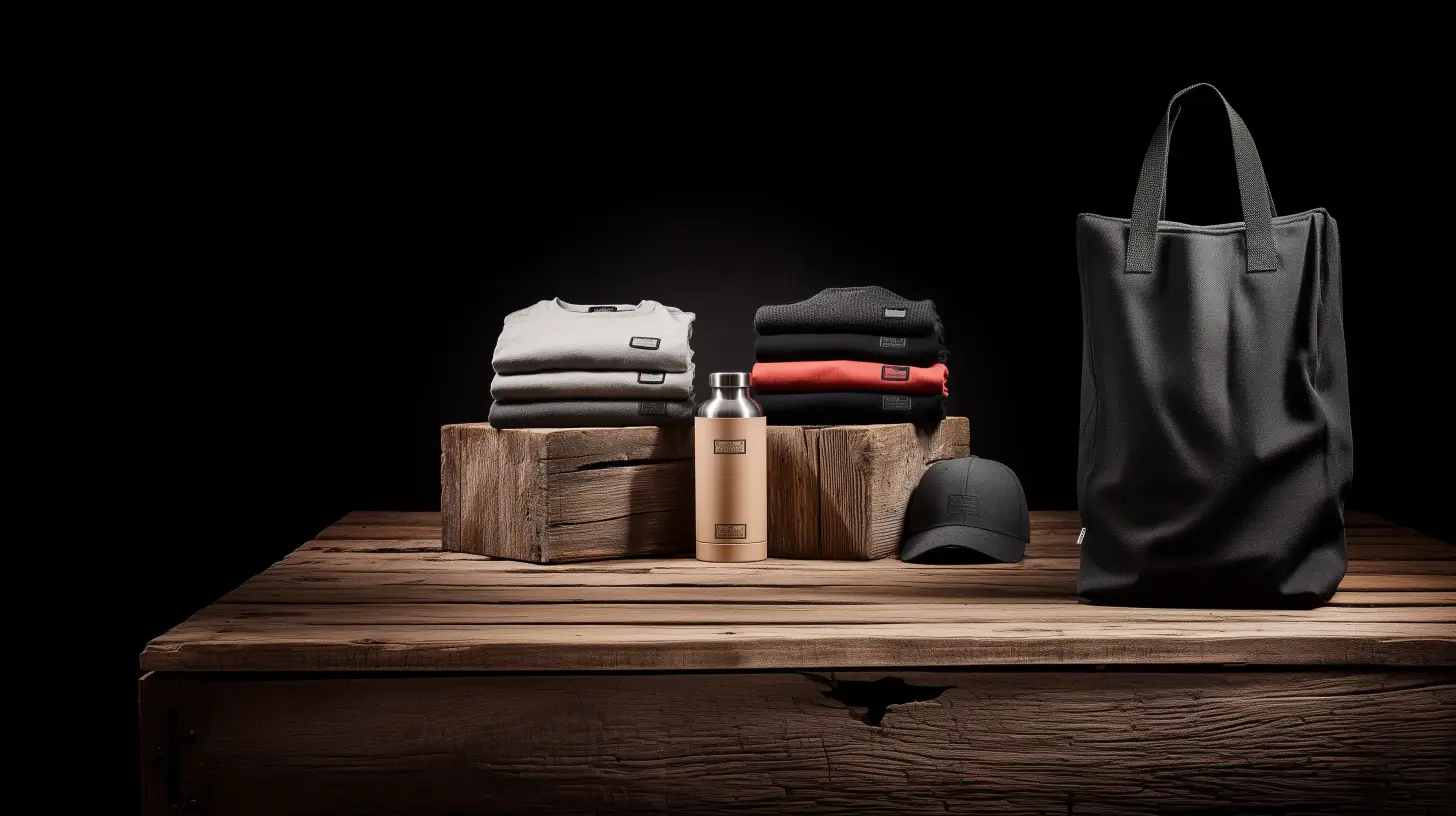


Step-by-step framework to build a corporate merchandise program, used by 1,500+ brands. Covers strategy, design, sourcing, fulfillment & optimization. By Asia’s first apparel consultancy.

Media

Got questions? Ask me!
💬
Tashya
Got questions? Ask me!
💬
Tashya
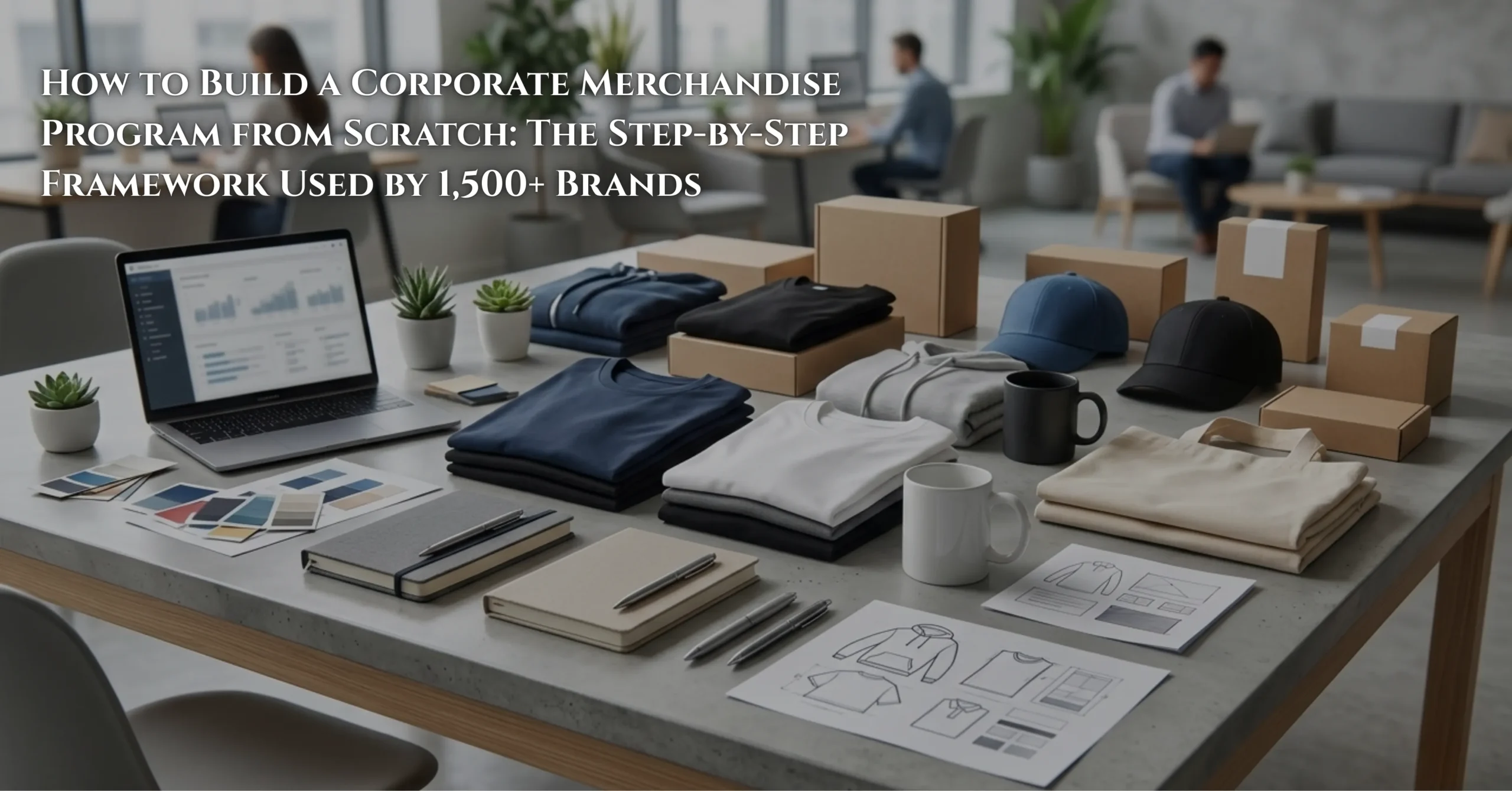
Step-by-step framework to build a corporate merchandise program, used by 1,500+ brands. Covers strategy, design, sourcing, fulfillment & optimization. By Asia’s first apparel consultancy.
Step-by-step framework to build a corporate merchandise program, used by 1,500+ brands. Covers strategy, design, sourcing, fulfillment & optimization. By Asia’s first apparel consultancy.
Every company uses branded merchandise in some form. T-shirts for a team retreat. Notebooks for a conference. Gifts for the year-end party. But most companies approach merchandise reactively, ordering items on an ad hoc basis, scrambling to meet deadlines, overspending on rush orders, and ending up with leftover inventory that nobody wants.
A corporate merchandise program transforms this chaos into a system. It is a structured, strategic approach to how your organization selects, designs, orders, distributes, and manages branded products across every department, occasion, and audience. Done well, a merchandise program saves money, reduces waste, strengthens brand consistency, and turns every branded item into a deliberate expression of your company’s identity and values.
This framework is distilled from SaltyCustoms’ 14 years of experience building and managing merchandise programs for over 1,500 international brands, from startups ordering their first batch of team tees to multinational corporations distributing hundreds of thousands of items across dozens of countries. Whether you are starting from zero or upgrading an informal process, this six-phase approach gives you a clear, repeatable path to a world-class merchandise program.
Before ordering a single product, you need to understand where you are, where you want to go, and who needs to be involved in getting there. This assessment phase prevents the most expensive mistake in merchandise programs: solving the wrong problem.
Start by gathering data on everything your organization currently spends on branded merchandise. This includes marketing department orders for events and campaigns, HR orders for onboarding kits and employee gifts, sales team orders for client gifts and trade show materials, individual department orders for team events and celebrations, and executive office orders for VIP gifts and corporate entertaining. Most companies are surprised by two things during this audit: the total spend is higher than anyone realized, and there is significant duplication, inconsistency, and waste across departments ordering independently.
Benchmark: Companies with no formal merchandise program typically waste 20 to 30 percent of their merchandise spend on rush order premiums, overstock disposal, inconsistent branding, and fragmented purchasing that misses volume discount opportunities. A structured program can recover most of this waste.
Your merchandise program should serve specific, measurable business objectives. Common objectives include strengthening brand consistency across all physical touchpoints, improving employee engagement and sense of belonging, enhancing client relationship management through strategic gifting, reducing total merchandise spend through consolidated procurement, minimizing waste through demand-driven ordering, aligning merchandise with sustainability and ESG goals, and creating a positive employer brand that supports recruitment.
Prioritize three to five primary objectives. These will guide every subsequent decision, from product selection to partner evaluation to budget allocation.
A successful merchandise program requires buy-in from multiple departments. Identify the key stakeholders early. Typically these include marketing (brand consistency, event merchandise), human resources (onboarding, recognition, culture), procurement (vendor management, cost control), finance (budgeting, approval workflows), and executive leadership (program sponsorship, VIP gifting). Establish a merchandise committee or designate a merchandise program owner who coordinates across departments. Without clear ownership, programs drift back into ad hoc chaos.
Brand consistency is the foundation of an effective merchandise program. Every branded item, from a simple pen to a premium jacket, should feel like it belongs to the same family. This requires clear, documented guidelines that anyone involved in the program can follow.
Your existing brand guidelines likely cover digital applications, but merchandise has unique requirements. Develop a merchandise brand guide that covers approved logo versions for different product types (single-color for embroidery, full-color for printing, reversed for dark garments), minimum and maximum logo sizes for each product category, approved color palette including Pantone codes for exact color matching in production, approved fonts for any text-based merchandise, photography and mockup standards for internal communications and marketing materials, and prohibited uses (stretched logos, unauthorized color variations, unapproved slogans).
Establish a curated catalog of approved product categories and minimum quality standards. This prevents individual departments from ordering cheap, off-brand items that undermine the program’s objectives. Define standards for fabric weight minimums (such as 180 GSM for t-shirts), printing method requirements by product type, sustainability requirements (such as minimum recycled content percentages or required certifications), and packaging standards for different gift tiers.
Plan your merchandise designs in advance across the year. A design calendar maps out the major gifting occasions (Chinese New Year, Hari Raya, Deepavali, year-end), recurring needs (onboarding, anniversaries), and campaign-driven merchandise. Having designs prepared in advance eliminates last-minute design rushes and ensures a cohesive visual identity throughout the year.
Your merchandise partner is the operational backbone of your program. The right partner makes everything easier; the wrong one creates constant friction. This is the most consequential decision in building your program.
End-to-end capability: The ideal partner handles design consultation, material sourcing, manufacturing, quality control, packaging, warehousing, and global distribution under one roof. Fragmented supply chains with separate design agencies, print shops, and logistics providers create handoff errors, communication gaps, and accountability voids.
Consultancy approach: The best merchandise partners do not just take orders. They consult. They ask questions about your objectives, your audience, your brand, and your budget before recommending solutions. This consultancy-first approach is the foundation of SaltyCustoms’ model as Asia’s first apparel consultancy firm, and it is what separates strategic merchandise partners from commodity print shops.
Ethical and sustainability credentials: Verify your partner’s manufacturing practices, certifications, and supply chain transparency. Ask for documentation. Visit facilities if possible. Your merchandise reflects your brand’s values, including how and where it is made.
Technology and systems: Modern merchandise programs require digital infrastructure: online ordering portals, inventory management dashboards, automated reordering, and reporting tools. Your partner’s technology capabilities directly impact program efficiency.
Geographic reach: For multinational organizations, your partner must be able to handle cross-border shipping, customs documentation, VAT and tax considerations, and local delivery in your key markets.
Quality control is not a one-time check at the end of production. It is a multi-point process that should be embedded throughout the manufacturing lifecycle. Establish clear quality benchmarks with your partner covering raw material inspection before production begins, in-process quality checks during manufacturing, print and embroidery accuracy verification against approved mockups, finished garment inspection for sizing, stitching, and overall appearance, and packaging quality before shipment.
At SaltyCustoms, our quality control process spans from raw material sourcing through to final packing. Fabrics undergo color fastness and enzyme treatments. Assembly follows precise multi-point guidelines. And every order goes through rigorous inspection before shipping. This multi-stage approach is what allows us to deliver to over 300,000 locations annually with 99 percent uptime on quality and timeliness.
With strategy, guidelines, and a partner in place, you need operational systems that make ordering easy, efficient, and controlled. The goal is to make it simple for authorized people to order the right merchandise while maintaining budget control and brand consistency.
The most effective approach for medium and large organizations is a branded merchandise e-store: a private online portal where authorized employees can browse, select, and order approved merchandise within their budget allocation. An e-store eliminates the pain points of traditional merchandise ordering. No more email chains collecting sizes. No more spreadsheets tracking preferences. No more overstock from guessing quantities. Employees self-select their items, choose their sizes, and the system handles the rest.
SaltyCustoms’ E-store solution provides exactly this capability. We build and manage your branded merchandise portal, from website setup through sales management and logistics. Your team browses and orders. We handle production, packing, and delivery. You get a new branded touchpoint and a streamlined operation with zero inventory headaches.
Implement tiered budget controls that balance accessibility with accountability. Common structures include per-employee annual merchandise budgets with self-service ordering for items within budget, departmental budgets with manager approval for orders above a threshold, centralized procurement for high-value items or non-standard requests, and executive-level approval for VIP gifts and custom orders above a defined value.
These controls prevent overspending while keeping the ordering process fast enough that people actually use it rather than reverting to ad hoc purchases.
The inventory strategy depends on your program model. For on-demand programs, items are produced only when ordered, eliminating inventory holding costs but requiring longer lead times. For stock programs, popular items are pre-produced and warehoused for immediate dispatch, reducing delivery time but requiring demand forecasting. For hybrid programs, core items (like onboarding kits) are kept in stock while seasonal or campaign items are produced on demand.
Your merchandise partner should provide inventory visibility and management tools. At SaltyCustoms, our clients have access to real-time inventory tracking, automated low-stock alerts, and demand forecasting based on historical ordering patterns.
For organizations with employees or offices in multiple locations, distribution logistics can be complex. Key considerations include centralized shipping to office locations for bulk distribution, direct-to-home shipping for remote employees (critical in the hybrid work era), international shipping with customs clearance for multinational distribution, and event-specific logistics with on-site delivery and setup.
SaltyCustoms’ global fulfillment capabilities are designed for exactly this complexity. We source globally to reduce shipping distances and carbon emissions, handle cross-border invoicing and customs documentation, and deliver to locations worldwide with tracking and accountability at every step.
A merchandise program only works if people use it. The launch phase is about communication, education, and creating momentum.
Announce the program with enthusiasm and clarity. Communicate what is available, how to order, what the budget allowances are, and what the expected timelines are. Use multiple channels: email announcement, intranet post, team meeting presentations, and if possible, a physical showcase of sample products that people can see and touch. Tangible products create excitement that digital communications alone cannot.
Train department heads, HR managers, and anyone responsible for ordering on how to use the system, manage budgets, and maintain brand guidelines. Provide a quick-reference guide and designate a point of contact for questions.
Generate immediate program adoption by tying the launch to a tangible event. Distribute a welcome kit to all employees as the program’s inaugural moment. This creates universal participation, generates social media buzz (encourage team photos in their new branded gear), and establishes the program’s quality standard from day one.
A merchandise program is not a one-time project. It is an ongoing system that should improve over time through data analysis, feedback, and strategic iteration.
Track key metrics quarterly and annually. These include total program spend vs. budget, cost per item and cost per recipient trends, most and least popular products, ordering patterns by department and season, delivery performance and quality metrics, waste metrics (overstock, returns, unused inventory), and employee satisfaction survey data related to merchandise.
This data reveals what is working, what needs adjustment, and where opportunities exist to improve quality, reduce costs, or expand the program.
At SaltyCustoms, we have helped corporations reduce merchandise wastage by 33 percent and bring annual spending down by 20 percent through data-driven optimization. The key strategies include right-sizing orders based on historical demand data rather than guesswork, shifting from bulk pre-production to on-demand or hybrid models where appropriate, eliminating low-engagement products and reinvesting in high-popularity items, improving size accuracy through better data collection and size guides, and implementing the e-store model so employees self-select, eliminating the primary source of waste (wrong sizes and unwanted items).
Once your core program is running smoothly, consider expanding into new product categories (drinkware, tech accessories, premium outerwear), new audiences (client gift programs, partner merchandise, alumni merchandise), new geographies (regional offices, international subsidiaries), new occasions (milestone celebrations, CSR initiatives, product launches), and new channels (employee merchandise e-store, client-facing branded shop).
Pitfall 1 — Choosing price over quality: Cheap merchandise that no one uses is more expensive than premium merchandise that gets worn weekly. Calculate cost-per-impression, not just cost-per-unit.
Pitfall 2 — Over-ordering: The fear of running short leads to chronic overordering, resulting in dead stock that gets donated, discarded, or warehoused indefinitely. Use data, not anxiety, to drive order quantities.
Pitfall 3 — Inconsistent branding: Multiple departments ordering independently from different suppliers produces merchandise that looks like it comes from different companies. Centralize brand guidelines and partner management.
Pitfall 4 — Ignoring employee preferences: Designing merchandise in a boardroom without input from the people who will wear it produces items that look good on paper but sit in drawers. Survey your team. Offer choices. Include diverse body types in your size ranges.
Pitfall 5 — Neglecting sustainability: In 2026, employees and clients expect sustainable merchandise. Companies that continue ordering cheap, disposable promotional items risk reputational damage and misalignment with their own ESG commitments.
Pitfall 6 — No measurement: If you are not tracking program metrics, you cannot improve. Invest in basic reporting from the start, even if it is a simple quarterly spreadsheet review.
[Schema Markup: FAQPage schema recommended for this section]
Start with an audit of your current merchandise spend across all departments. Define 3 to 5 clear program objectives. Identify key stakeholders from marketing, HR, procurement, and finance. Create merchandise-specific brand guidelines. Select a merchandise partner with end-to-end capabilities. Then launch with a visible first initiative like a company-wide welcome kit to build momentum and adoption.
A merchandise management program is a structured system for how an organization selects, designs, orders, distributes, and manages all branded products. It includes brand guidelines, approved product catalogs, ordering processes (often via a digital e-store), budget controls, quality standards, inventory management, and performance measurement. The goal is to replace ad hoc, fragmented merchandise ordering with a centralized, strategic approach that saves money and strengthens brand consistency.
Costs vary widely based on company size, number of gifting occasions, product quality tier, and geographic distribution needs. As a general benchmark, companies with 100 to 500 employees typically invest RM 30,000 to RM 150,000 annually in a comprehensive merchandise program covering onboarding, cultural holidays, year-end gifting, and events. The key metric is not total spend but return on investment: programs that reduce waste by 20 to 30 percent and improve employee engagement often pay for themselves through efficiency gains and cultural impact.
An e-store is highly recommended for organizations with more than 100 employees or those operating across multiple locations. It eliminates the operational burden of manually collecting sizes and preferences, reduces overstock waste, gives employees choice (which increases satisfaction and usage rates), and provides data for program optimization. For smaller organizations, a simplified ordering process through your merchandise partner may suffice initially.
Track metrics across four dimensions. Operational efficiency: cost per item trends, order accuracy, delivery timeliness. Financial: total spend vs. budget, cost savings from consolidated purchasing, waste reduction. Engagement: employee survey scores, merchandise usage rates, social media sharing. Brand: consistency audit results, client feedback on gifted merchandise, employer brand perception in recruitment.
A basic program can be operational within 4 to 6 weeks: audit (week 1), strategy and guidelines (weeks 2-3), partner onboarding (weeks 3-4), and launch (weeks 5-6). A comprehensive program with e-store setup, multi-department rollout, and international distribution typically takes 8 to 12 weeks. The timeline depends on organizational complexity, approval processes, and the scope of the initial launch.
Building a corporate merchandise program from scratch can feel overwhelming. The framework above breaks it into manageable phases, but execution still requires expertise, infrastructure, and a partner who understands both the strategic and operational dimensions of merchandise management.
That is exactly what SaltyCustoms was built to provide. As Asia’s first apparel consultancy firm, we go beyond taking orders. We partner with organizations to design, build, and manage merchandise programs that align with their brand, their values, and their business objectives. From initial strategy through design consultation, ethical manufacturing, quality control, e-store setup, and global fulfillment, we provide the end-to-end capability that makes complex merchandise programs simple.
Our clients include startups building their first brand identity and Fortune 500 companies managing merchandise across 26 countries. What they share is a belief that branded merchandise, done right, is one of the most powerful tools for building culture, strengthening relationships, and communicating what their organization stands for.
Ready to build your merchandise program? Schedule a free consultation with our team and let us show you how 1,500 plus brands have transformed their approach to corporate merchandise.