



Complete guide to sustainable corporate merchandise in 2026. Eco-friendly materials, ethical manufacturing, green packaging & ESG-aligned gifting. By Asia’s first apparel consultancy.

Media

Got questions? Ask me!
💬
Tashya
Got questions? Ask me!
💬
Tashya
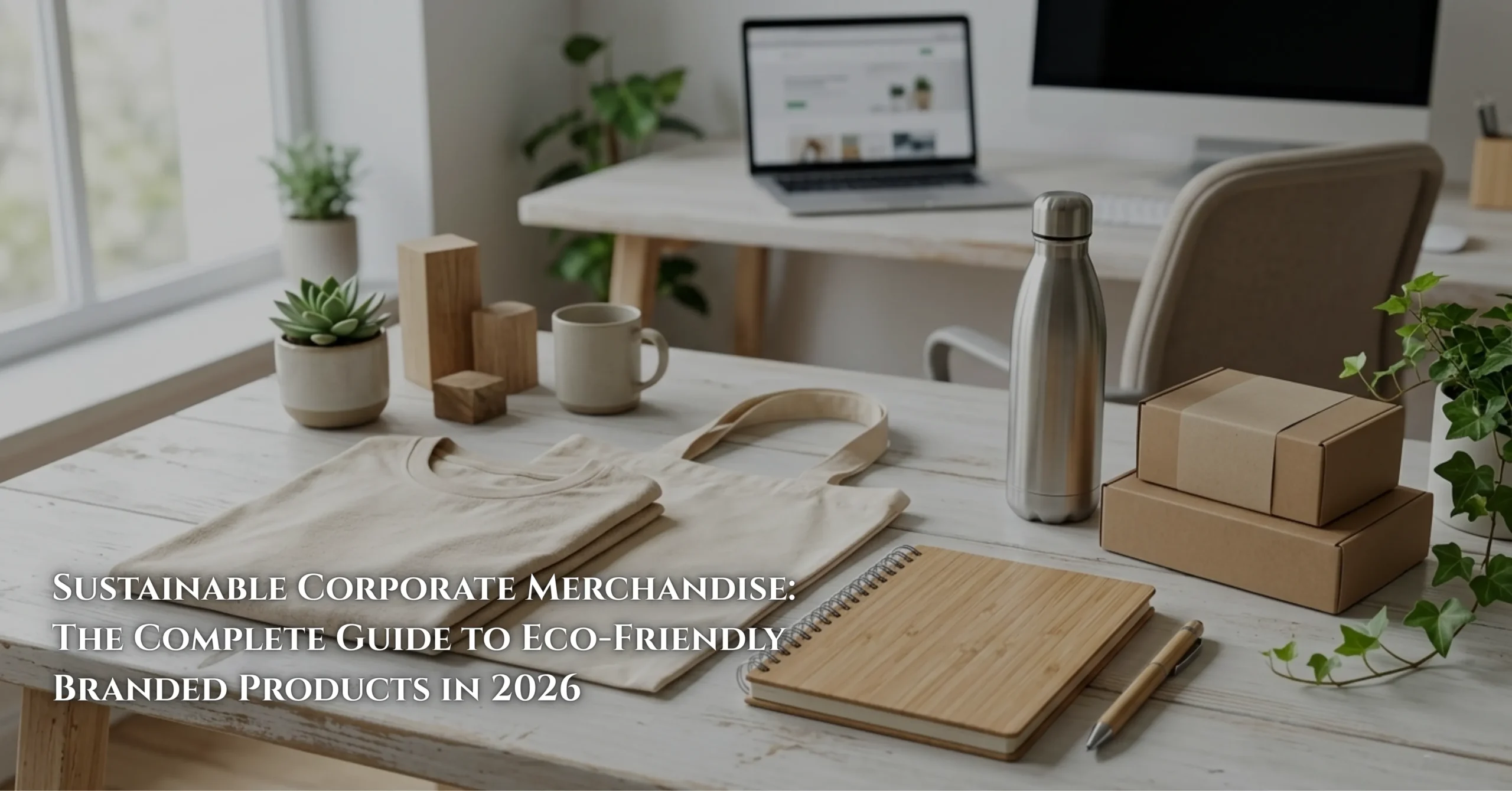
Complete guide to sustainable corporate merchandise in 2026. Eco-friendly materials, ethical manufacturing, green packaging & ESG-aligned gifting. By Asia’s first apparel consultancy.
Complete guide to sustainable corporate merchandise in 2026. Eco-friendly materials, ethical manufacturing, green packaging & ESG-aligned gifting. By Asia’s first apparel consultancy.
Sustainability in corporate merchandise is no longer a differentiator. It is a baseline expectation. In 2026, the question is not whether your branded products should be sustainable, but how deeply your sustainability commitment extends across materials, manufacturing, packaging, and end-of-life considerations.
The data backs this up. Seventy-eight percent of businesses have increased their investment in eco-friendly promotional products over the past two years. Nearly half of consumers report more favorable views of brands that provide environmentally responsible merchandise. And corporate ESG reporting requirements across Asia-Pacific, Europe, and North America are making sustainable procurement not just a moral choice, but a compliance requirement.
Yet navigating sustainability in the merchandise industry remains confusing. Greenwashing is rampant. Certifications are numerous and overlapping. Price myths persist. And the gap between aspiration and execution is wide for many organizations.
This guide cuts through the noise. Drawing on SaltyCustoms’ 14 years of experience as Asia’s first apparel consultancy firm, and our deep commitment to ESG-aligned manufacturing, we provide a practical, comprehensive framework for building a truly sustainable corporate merchandise program.
Sustainability in merchandise is not a single attribute. It is a system. A t-shirt made from organic cotton is not truly sustainable if it was manufactured in a factory with exploitative labor practices, dyed with toxic chemicals, wrapped in single-use plastic, and shipped by air freight across the globe. True sustainability requires a holistic approach across the entire product lifecycle.
Pillar 1 — Materials: What is the product made from? Sustainable materials include organic cotton, recycled polyester (rPET), bamboo fiber, hemp, Tencel/lyocell, recycled nylon, and ocean-bound plastics. The key criteria are whether the raw materials are renewable, recycled, or responsibly sourced, and whether their production minimizes water usage, chemical inputs, and carbon emissions.
Pillar 2 — Manufacturing: How is the product made? Sustainable manufacturing encompasses ethical labor practices (fair wages, safe working conditions, no child labor), environmentally responsible production (water-saving dyeing techniques, renewable energy, waste reduction), and supply chain transparency (auditable sourcing, certified factories, traceable materials).
Pillar 3 — Lifecycle: What happens after the product is made? This includes packaging (compostable or recyclable materials), distribution (optimized shipping routes, carbon-neutral logistics), product durability (longer-lasting items that reduce replacement frequency), and end-of-life (recyclable, biodegradable, or part of a take-back program).
Key Principle: The most sustainable product is one that gets used repeatedly over a long period. A premium-quality corporate t-shirt that an employee wears weekly for two years has a dramatically lower environmental impact per use than a cheap promotional tee that ends up in landfill after one wearing. Quality is sustainability.
Greenwashing occurs when a company makes misleading claims about the environmental benefits of its products. In the merchandise industry, greenwashing is unfortunately common. Watch for vague claims like “eco-friendly” or “green” without specific certifications, products that highlight one sustainable attribute while ignoring significant environmental impacts elsewhere, and suppliers who cannot provide documentation or certification for their sustainability claims.
Genuine sustainability is specific, verifiable, and transparent. It names the exact materials used, references third-party certifications, provides data on environmental impact, and acknowledges areas where improvement is still needed. No product is perfectly sustainable, and any supplier who claims otherwise should be treated with skepticism.
Third-party certifications provide independent verification that a product or manufacturing process meets defined environmental and ethical standards. Here are the certifications most relevant to corporate merchandise, and what each one actually guarantees.
| Certification | What It Covers | Key Guarantee | Look For On |
| GOTS | Global Organic Textile Standard | Organic fibers (95%+), processing, manufacturing, labeling | Cotton apparel, textiles |
| OEKO-TEX 100 | Harmful substances testing | Product tested for 100+ harmful substances, safe for skin contact | All apparel, children’s wear |
| GRS | Global Recycled Standard | Recycled content verified (20%+), chain of custody tracking | Recycled polyester, rPET products |
| Fair Trade | Social, economic & environmental | Fair wages, safe conditions, community investment, environmental protection | Cotton, finished apparel |
| BSCI | Business Social Compliance | Labor rights, occupational health, environmental protection in factories | Factory/supplier level |
| bluesign® | Chemical safety & resource efficiency | Responsible use of chemicals, resource productivity, consumer safety | Performance fabrics, sportswear |
| FSC | Forest Stewardship Council | Responsibly managed forests for paper and wood products | Notebooks, packaging, paper goods |
| ISO 14001 | Environmental management systems | Organization has systematic environmental management | Factory/supplier level |
Regional Context: In Malaysia, the SIRIM Eco-Label provides local environmental certification. In Singapore, the Singapore Green Label Scheme (SGLS) administered by the Singapore Environment Council certifies products that meet environmental standards. Both are increasingly recognized in government procurement requirements across Southeast Asia.
Choosing the right sustainable material depends on the product type, the intended use, the desired aesthetic, and budget constraints. Here is a detailed look at the most important sustainable materials available for corporate merchandise in 2026.
Organic cotton is grown without synthetic pesticides, herbicides, or genetically modified seeds. It uses natural methods like crop rotation, composting, and biological pest control. The environmental benefits are substantial: organic cotton farming uses up to 91 percent less water from blue water sources (rivers, lakes, and groundwater) compared to conventional cotton, and eliminates toxic chemical runoff that contaminates waterways and harms ecosystems.
In terms of quality and feel, organic cotton is virtually identical to conventional cotton. Most people cannot tell the difference by touch. The premium cost for organic cotton has decreased significantly as demand has scaled, and in 2026, the price gap is typically 15 to 25 percent above conventional cotton, a premium that many corporate buyers consider worthwhile for the credibility and ESG alignment it provides.
Best for: T-shirts, hoodies, tote bags, and any product where cotton comfort is desired with a genuine sustainability story.
Recycled polyester, often labeled as rPET, is made from post-consumer plastic bottles and other polyester waste. The process involves collecting, cleaning, shredding, and melting the plastic into new polyester fibers. Producing rPET uses approximately 59 percent less energy and generates 32 percent fewer carbon emissions compared to virgin polyester production.
The performance characteristics of rPET are essentially identical to virgin polyester. It wicks moisture, dries quickly, holds color well, and is durable through repeated washing. For corporate merchandise, rPET offers a compelling sustainability narrative: your team is literally wearing recycled plastic bottles that have been diverted from landfills and oceans.
Best for: Performance apparel, sports jerseys, bags, backpacks, and any product where polyester is the preferred base material.
Bamboo is one of the fastest-growing plants on earth, requiring no irrigation, pesticides, or fertilizers. It regenerates from its own root system, so harvesting does not destroy the plant. Bamboo fabric has natural antimicrobial and moisture-wicking properties, making it comfortable in hot and humid climates.
However, the processing of bamboo into fabric often involves chemical-intensive methods (viscose/rayon process). Look for bamboo products that use mechanical processing or closed-loop chemical processes (like lyocell technology) where solvents are captured and recycled rather than released into the environment.
Best for: Towels, socks, undergarments, and non-apparel items like bamboo utensil sets, notebooks, and desk accessories.
Hemp is one of the most environmentally friendly fibers available. It grows rapidly with minimal water, naturally suppresses weeds (eliminating the need for herbicides), and actually improves soil health as it grows. Hemp fabric is exceptionally durable, becoming softer with each wash while maintaining its structural integrity.
The perception of hemp has evolved dramatically. Modern hemp fabrics bear no resemblance to the rough, coarse material of the past. Today’s hemp textiles are soft, comfortable, and can be blended with organic cotton for an even softer hand-feel. Hemp blends are increasingly appearing in premium corporate apparel as brands seek differentiation through genuinely innovative sustainable materials.
Best for: Premium merchandise lines, tote bags, caps, and corporate apparel where a unique sustainability story adds brand value.
Tencel is a branded form of lyocell, a fiber made from sustainably harvested wood pulp using a closed-loop process that recovers over 99 percent of the solvents used in production. The resulting fabric is silky smooth, breathable, naturally moisture-wicking, and biodegradable.
Tencel blends are increasingly popular in premium corporate apparel because they combine a luxury feel with impeccable sustainability credentials. The fabric drapes beautifully, resists wrinkles, and is gentle on sensitive skin. It is more expensive than cotton or polyester, but the quality difference is immediately noticeable.
Best for: Premium corporate apparel, executive gifts, high-end merchandise lines where tactile quality matters.
| Material | Water Saving | Carbon Saving | Cost Premium | Durability | Certifications |
| Organic Cotton | Up to 91% | 46% less CO2 | 15-25% | High | GOTS, OCS |
| Recycled Polyester | N/A | 32% less CO2 | 10-20% | Very High | GRS |
| Bamboo (Lyocell) | Minimal irrigation | Moderate | 20-35% | High | FSC, OEKO-TEX |
| Hemp | Up to 80% | Significant | 25-40% | Very High | Organic standards |
| Tencel/Lyocell | Moderate | Significant | 30-50% | High | FSC, EU Ecolabel |
Sustainable materials are only one part of the equation. How those materials are transformed into finished products matters just as much. The manufacturing process encompasses dyeing, cutting, sewing, printing, finishing, quality control, and waste management. Each stage presents opportunities for environmental improvement.
Conventional textile dyeing is one of the most water-intensive and polluting processes in the apparel industry. A single cotton t-shirt can require up to 2,700 liters of water to produce, with much of that consumed during dyeing. Sustainable alternatives are transforming this stage of production.
Waterless dyeing technology uses supercritical CO2 as a solvent instead of water, eliminating wastewater entirely. The CO2 is captured and recycled in a closed loop. While still emerging at scale, waterless dyeing is increasingly available for polyester-based products.
Low-liquor ratio dyeing reduces the amount of water used per kilogram of fabric by optimizing the dye bath ratio. Modern low-liquor machines can reduce water consumption by 50 percent compared to conventional equipment.
Solution dyeing (dope dyeing) adds color to synthetic fibers during the extrusion process, before the fiber is formed. This eliminates the separate dyeing stage entirely, saving up to 90 percent of the water and 60 percent of the energy used in conventional dyeing.
Leading garment manufacturers are transitioning to renewable energy sources for their production facilities. Solar panels, wind energy, and biomass power are replacing fossil fuel-dependent electricity grids. For corporate buyers, asking about your supplier’s energy sources is one of the most impactful sustainability questions you can raise.
Traditional garment cutting generates 15 to 20 percent fabric waste. Advanced cutting algorithms and marker-making software can reduce this to under 5 percent by optimizing the layout of pattern pieces on the fabric. Some manufacturers are going further, using fabric scraps for smaller products (accessories, patches, stuffing) or recycling them into new fibers.
Sustainability extends beyond environmental concerns to encompass the people who make your merchandise. Ethical manufacturing means fair wages that meet or exceed local living wage standards, safe and healthy working conditions, reasonable working hours with proper overtime compensation, freedom of association and collective bargaining rights, no child labor or forced labor of any kind, and equal treatment regardless of gender, ethnicity, or religion.
At SaltyCustoms, our manufacturing partners adhere to strict production guidelines and ethical policies. We believe that a truly sustainable product cannot be made by people who are exploited in the process. This commitment to ethical sourcing has been a core value since our founding, and it extends across every supplier in our network.
Building a sustainable corporate merchandise program does not mean limiting your options. Today’s sustainable product range is broader, more diverse, and higher quality than ever before. Here are recommended products across the major corporate merchandise categories.
Organic cotton t-shirts (180-220 GSM): The foundation of any sustainable merchandise program. Available in a wide range of colors and fits. GOTS-certified options ensure the full supply chain meets organic standards. Pair with water-based screen printing inks for a fully sustainable finished product.
Recycled polyester performance wear: Made from post-consumer plastic bottles (rPET), these jerseys, polo shirts, and athletic tops offer the same performance characteristics as virgin polyester with a fraction of the environmental footprint. Ideal for sports events, outdoor team activities, and company runs.
Hemp-blend hoodies and outerwear: Hemp-cotton blends create exceptionally durable, comfortable outerwear with a unique texture that sets your merchandise apart. The natural antimicrobial properties of hemp mean the garment stays fresher longer between washes.
Tencel-blend premium apparel: For executive merchandise or limited-edition corporate drops, Tencel-blended shirts and polos offer a luxury feel with best-in-class sustainability credentials.
Recycled cotton tote bags: Made from pre-consumer or post-consumer cotton waste, these totes reduce textile waste while providing a practical, reusable alternative to single-use bags. A heavyweight recycled cotton tote can replace hundreds of disposable bags over its lifetime.
rPET laptop backpacks: Functional, professional backpacks made from recycled plastic bottles. Modern rPET backpacks are indistinguishable from their virgin material counterparts in terms of quality, durability, and appearance. Each backpack diverts approximately 12 to 15 plastic bottles from landfill.
Upcycled material bags: A growing category where bags are made from industrial waste materials such as truck tarpaulins, sail cloth, or factory fabric scraps. Each piece is unique, creating a distinctive brand statement.
Recycled stainless steel bottles: Premium insulated bottles made from recycled stainless steel. These keep drinks cold for 24 hours or hot for 12 hours, replacing hundreds of single-use plastic bottles per year per recipient. The brand impression is premium, practical, and unmistakably eco-conscious.
Bamboo travel mugs: Lightweight, natural-looking alternatives to plastic travel mugs. Bamboo fiber mugs are biodegradable at end of life and offer a warm, organic aesthetic that stands out from standard corporate drinkware.
Recycled paper notebooks: Made from 100 percent post-consumer recycled paper with covers from recycled cardboard or kraft paper. FSC certification ensures responsible sourcing throughout.
Plantable seed paper products: Business cards, bookmarks, and event materials embedded with seeds that can be planted after use. The paper biodegrades and flowers or herbs grow in its place. This is a memorable, conversation-starting corporate gift that literally gives back to the environment.
Bamboo desk accessories: Pen holders, phone stands, desk organizers, and cable management products made from sustainable bamboo. These items see daily use, keeping your brand visible on the recipient’s desk while communicating environmental responsibility.
Your product might be sustainably sourced and ethically manufactured, but if it arrives wrapped in layers of virgin plastic, the environmental message is undermined. Packaging is the first physical touchpoint your recipient has with the product, and it communicates your values before they even see what is inside.
Compostable mailers: Made from plant-based materials (typically cornstarch or PLA), these mailers break down in commercial composting facilities within 90 to 180 days. They look and feel similar to traditional plastic mailers but carry a dramatically lower environmental impact.
Recycled cardboard boxes: Made from post-consumer recycled cardboard, printed with soy-based or vegetable-based inks. Fully recyclable after use. Custom printing on recycled cardboard can be just as sharp and professional as virgin material.
Tissue paper and filler: Replace virgin tissue paper with recycled or FSC-certified alternatives. Replace plastic void fill with shredded recycled paper, corrugated cardboard inserts, or mushroom-based packaging foam.
Branded stickers and tape: Use paper-based branded stickers and kraft paper tape instead of plastic tape and synthetic stickers. These small details signal a cohesive sustainability commitment.
Packaging Insight: The most sustainable packaging is the least packaging. Right-size your packaging to minimize material use and shipping volume. An oversized box filled with filler is wasteful even if the filler is recycled. Design your packaging around the product, not the other way around.
What gets measured gets managed. Tracking the environmental impact of your merchandise program allows you to set meaningful targets, demonstrate progress to stakeholders, and integrate merchandise into your broader ESG reporting.
Carbon footprint per item: Measure the total greenhouse gas emissions associated with producing, shipping, and disposing of each merchandise item. Your merchandise partner should be able to provide estimated carbon data for their products and supply chain.
Water usage per item: Track the total water consumed in raw material production, dyeing, finishing, and washing. Compare conventional vs. sustainable material choices to quantify the water savings of your sustainable procurement decisions.
Waste diversion rate: Measure the percentage of merchandise-related waste (production waste, packaging waste, unsold inventory) that is recycled, composted, or otherwise diverted from landfill. At SaltyCustoms, we have helped corporations reduce merchandise wastage by 33 percent through data-driven ordering and quality-first product selection.
Recycled and organic content percentage: Track the percentage of your total merchandise spend that goes to products made from recycled, organic, or sustainably certified materials. Set annual targets for increasing this percentage.
When communicating your sustainable merchandise efforts to employees, clients, and stakeholders, follow these principles. Be specific: state the exact materials, certifications, and impact numbers. Do not use vague terms like “eco-friendly” without substantiation. Be honest: acknowledge that sustainability is a journey and that no product is perfectly sustainable. Share what you are doing well and what you are working to improve. Be proportionate: do not overemphasize a minor sustainability feature while ignoring larger environmental impacts. A genuine, balanced sustainability communication builds trust. An exaggerated one erodes it.
The most persistent barrier to sustainable corporate merchandise is the belief that it costs significantly more. This perception is outdated and increasingly inaccurate.
In 2026, the price premium for sustainable alternatives has narrowed considerably across most product categories. Organic cotton t-shirts typically cost 15 to 25 percent more than conventional cotton. Recycled polyester products carry a 10 to 20 percent premium. And in some categories, sustainable options are cost-competitive with conventional alternatives, particularly when you account for the full value chain.
Unit cost comparisons miss the full picture. A sustainable corporate t-shirt that lasts twice as long as a cheap conventional one delivers a lower cost per wearing. A premium recycled tote bag that gets used weekly for two years delivers far more brand impressions per dollar than a disposable promotional bag that is discarded after one use.
When you factor in brand perception value, employee satisfaction, ESG reporting benefits, and reduced waste disposal costs, sustainable merchandise often delivers superior return on investment compared to conventional alternatives. The 2026 Custom Ink survey found that 67 percent of corporate buyers consider their merchandise investment successful only if recipients voluntarily use the items. Sustainable, high-quality products are far more likely to pass this test.
Order fewer, better items: Invest your budget in fewer premium sustainable products rather than a higher volume of cheap conventional items. Three hundred high-quality organic cotton t-shirts that people wear weekly outperform one thousand cheap tees that sit in drawers.
Consolidate and plan ahead: Larger orders reduce per-unit costs. Plan your annual merchandise needs in advance and consolidate orders to capture volume pricing on sustainable products.
Start with one category: You do not need to switch your entire merchandise program to sustainable options overnight. Start with your highest-volume product (often t-shirts) and expand from there.
[Schema Markup: FAQPage schema recommended for this section]
Truly sustainable corporate merchandise addresses three pillars: materials (organic, recycled, or responsibly sourced raw materials), manufacturing (ethical labor practices, energy efficiency, water conservation, waste reduction), and lifecycle (durable products, sustainable packaging, recyclable or biodegradable at end of life). Look for third-party certifications like GOTS, GRS, OEKO-TEX, and Fair Trade to verify sustainability claims.
Start by prioritizing utility and quality. The most eco-friendly gift is one that gets used repeatedly rather than discarded. Choose products made from certified sustainable materials (organic cotton, recycled polyester, bamboo, hemp). Verify your supplier’s manufacturing practices and certifications. Select sustainable packaging. And consider the full lifecycle: will this product last, and what happens when it reaches end of life?
The most popular sustainable promotional products in 2026 are organic cotton t-shirts and tote bags, recycled stainless steel water bottles, rPET backpacks, bamboo desk accessories, recycled paper notebooks, and plantable seed paper products. These items combine genuine sustainability credentials with high utility, ensuring recipients use them regularly.
The cost premium for sustainable merchandise has narrowed significantly. Organic cotton typically costs 15 to 25 percent more than conventional cotton. Recycled polyester carries a 10 to 20 percent premium. When you account for longer product lifespan, higher usage rates, improved brand perception, and ESG reporting benefits, sustainable merchandise often delivers superior return on investment compared to conventional alternatives.
Sustainable corporate merchandise contributes to multiple ESG pillars. Environmental: reduced carbon emissions, water savings, waste diversion, and lower chemical pollution. Social: ethical labor practices, fair wages, safe working conditions, and community investment through certified supply chains. Governance: transparent procurement practices, verifiable sustainability claims, and documented impact metrics for ESG reporting.
The most relevant certifications for corporate merchandise are GOTS (organic textiles), GRS (recycled content), OEKO-TEX Standard 100 (harmful substance testing), Fair Trade (social and economic standards), FSC (paper and wood products), and bluesign (chemical safety and resource efficiency). For Southeast Asian markets, also look for SIRIM Eco-Label (Malaysia) and Singapore Green Label Scheme.
At SaltyCustoms, sustainability is not a marketing message. It is a foundational principle that has guided our operations since our founding. As Asia’s first apparel consultancy firm, we have built our entire supply chain around ethical sourcing, responsible manufacturing, and environmental stewardship.
We embrace recycled plastics and 100 percent organic materials, transforming eco-conscious choices into premium fabrics. Our manufacturing partners adhere to strict ethical guidelines. Our quality control processes ensure that sustainable does not mean compromising on quality. And our global fulfillment network is optimized to reduce shipping distances and carbon emissions.
Whether you are just beginning your sustainability journey or looking to deepen an existing commitment, our team will guide you through every decision, from material selection and certification verification to impact measurement and ESG reporting integration.
Ready to make your merchandise sustainable? Talk to our sustainability team today and let us help you build a merchandise program that is good for your brand, your people, and the planet.